How to Get From 3.5 to 4.0 in Pickleball (Fast Is the Wrong Goal)
How to get from 3.5 to 4.0 in pickleball: what actually changes at 4.0, why more reps stall, and the one-patience-rep drill that moves the needle.
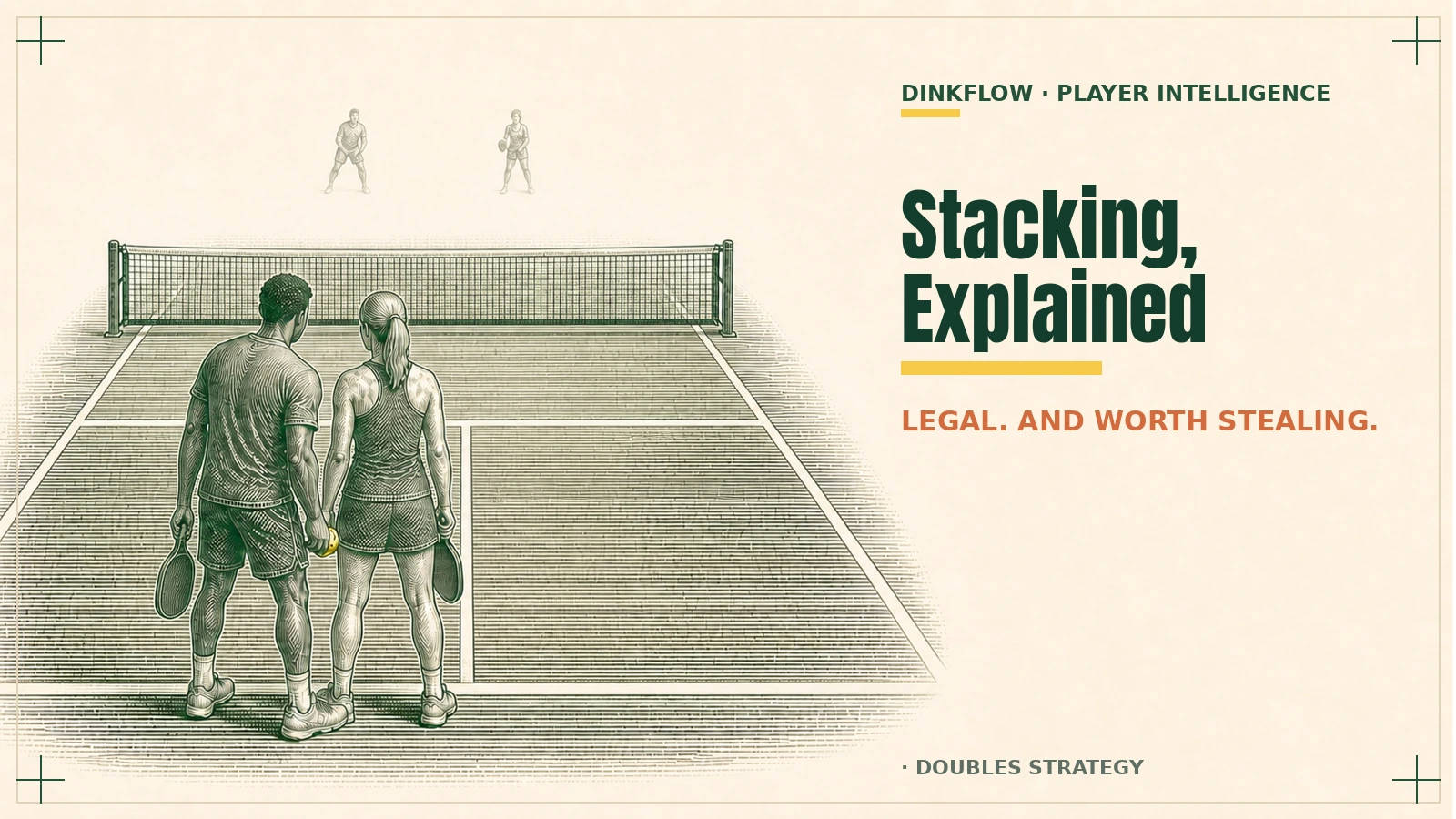
What stacking in pickleball is, why it's legal under the official rules, how to stack on serve and return without faulting, and when the switch is worth it.
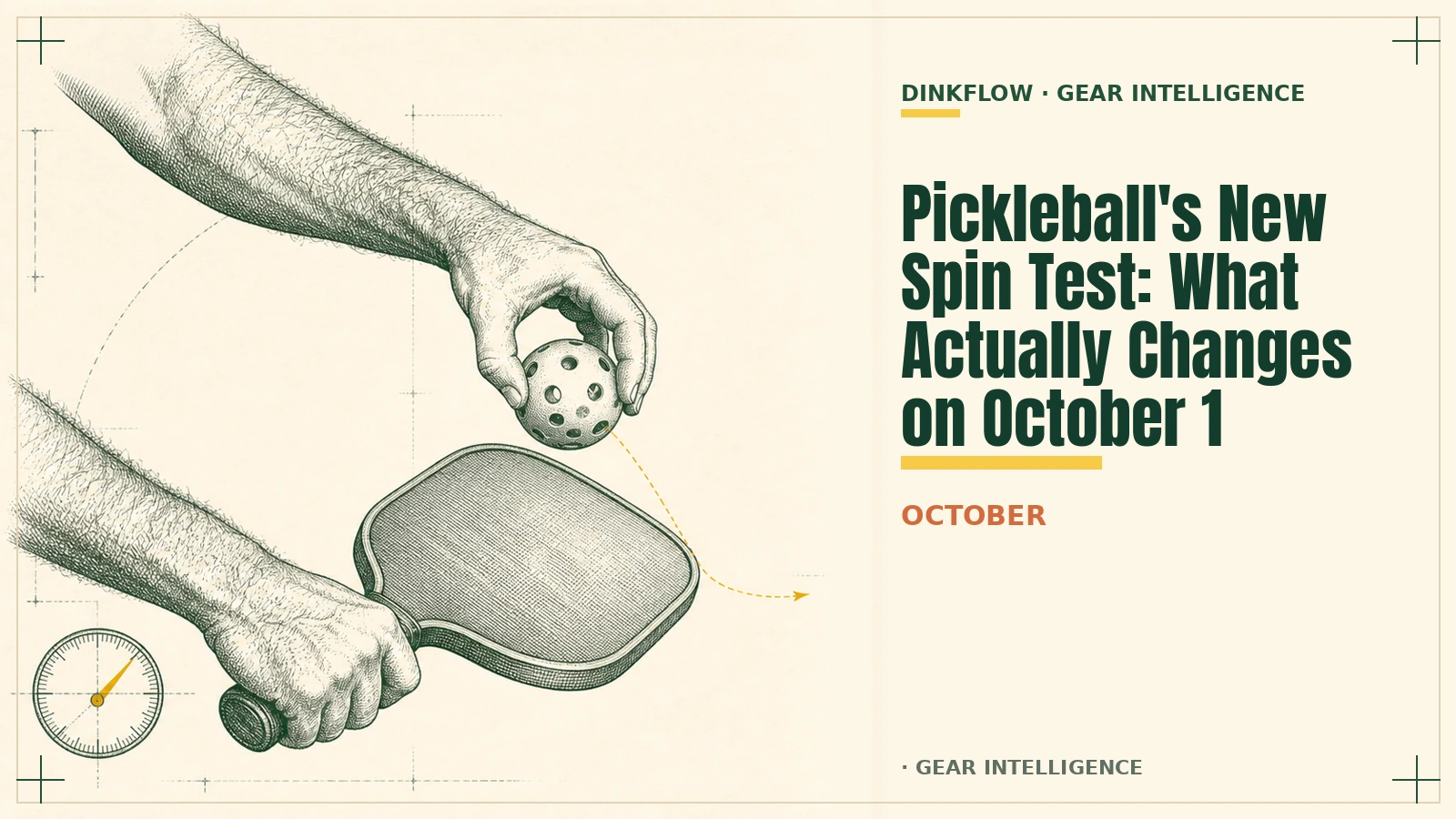
USA Pickleball adds a 2,100 RPM spin rate test on October 1, 2026. Here is what it measures, why your current paddle stays legal, and why the pre-October panic buy is not the play.
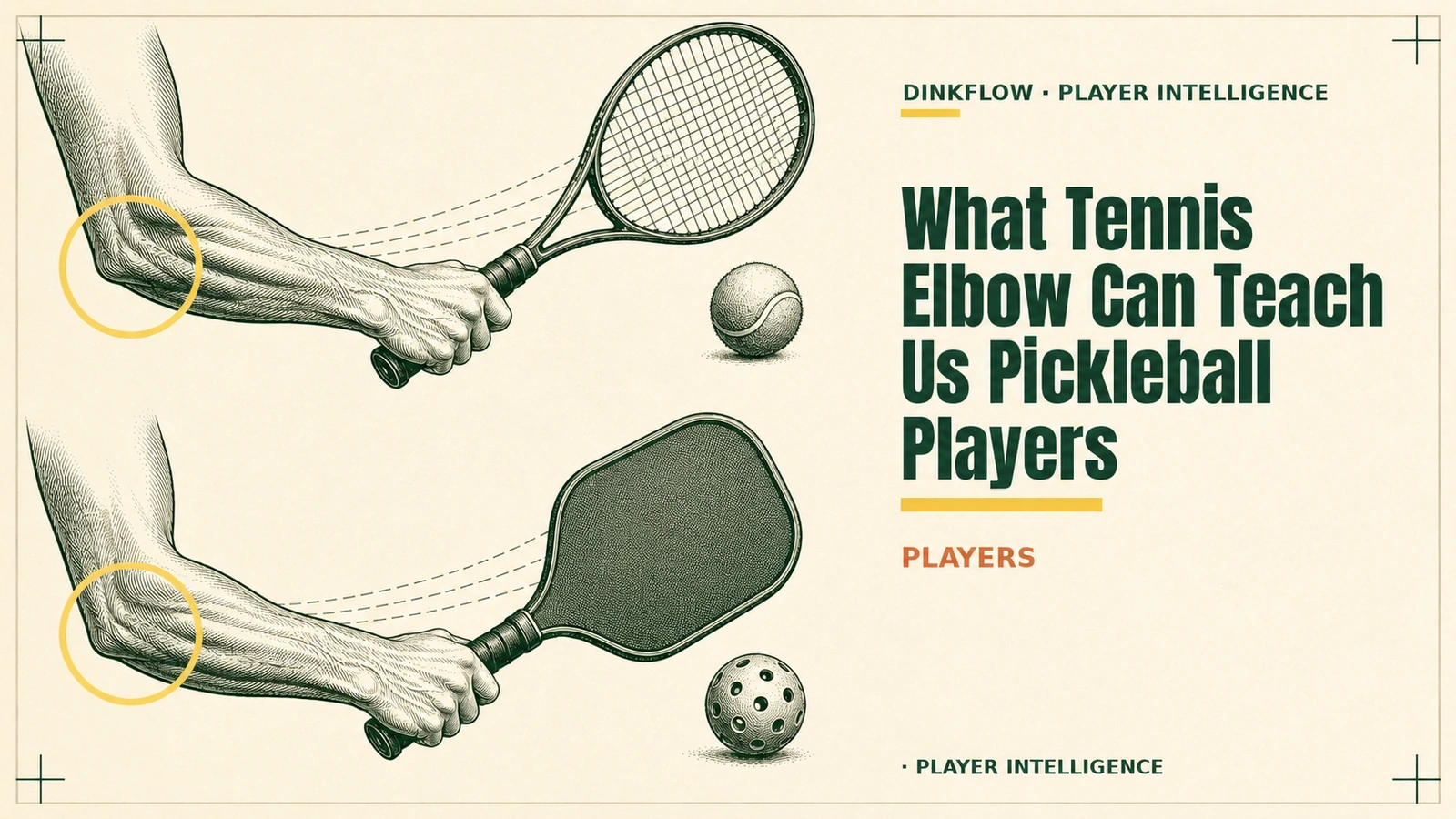
Pickleball borrowed tennis's name for the injury, and for most of what we think we know about it. Here's what genuinely transfers from the mature tennis-elbow science, what doesn't, and the honest gaps, including whether it's even the same side of the elbow.
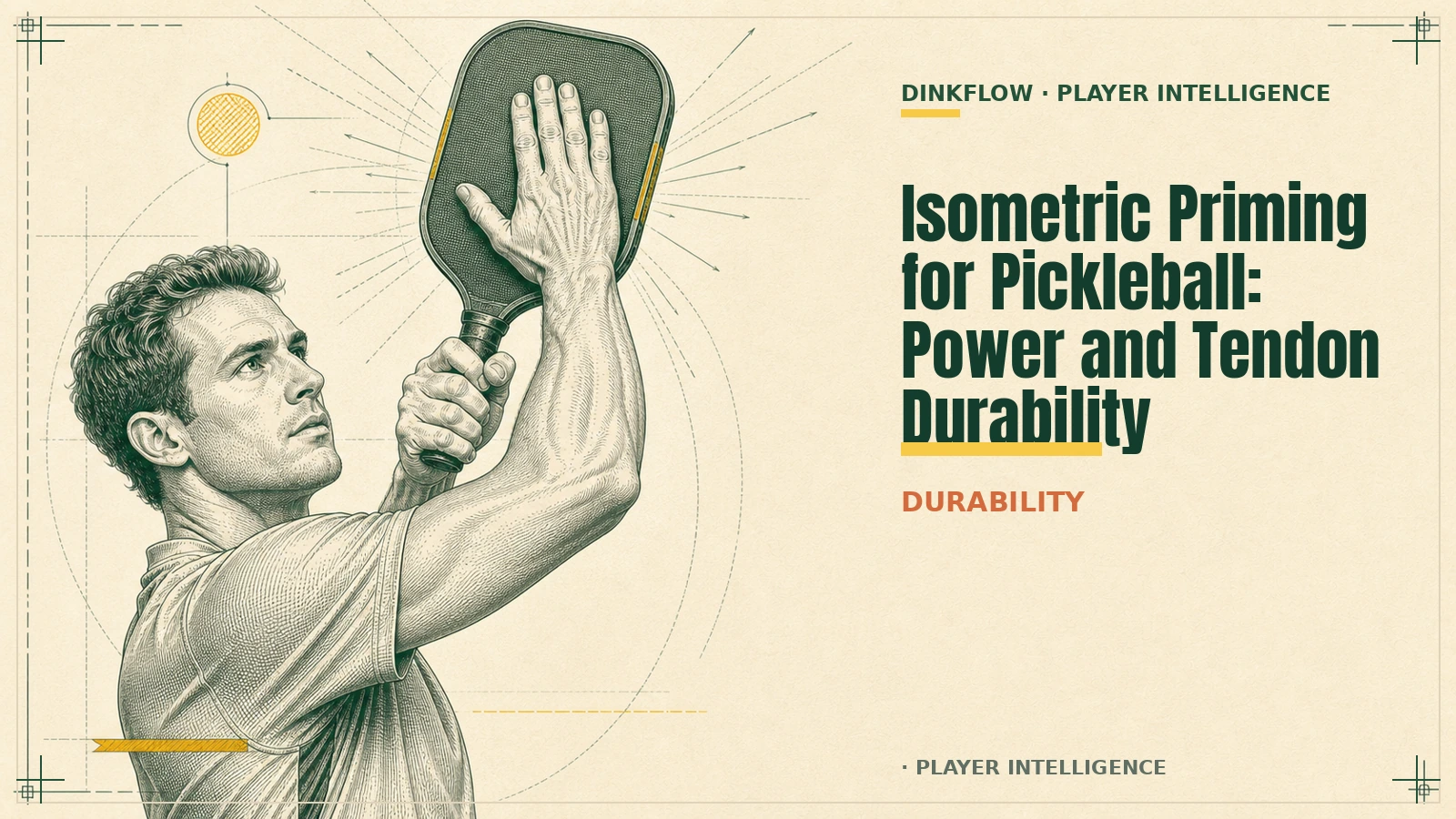
The performance side of paddle isometrics for healthy players: brief, near-maximal holds that build tendon durability, position-specific strength, and a modest pre-match primer — with honest effect sizes and the safety rules.
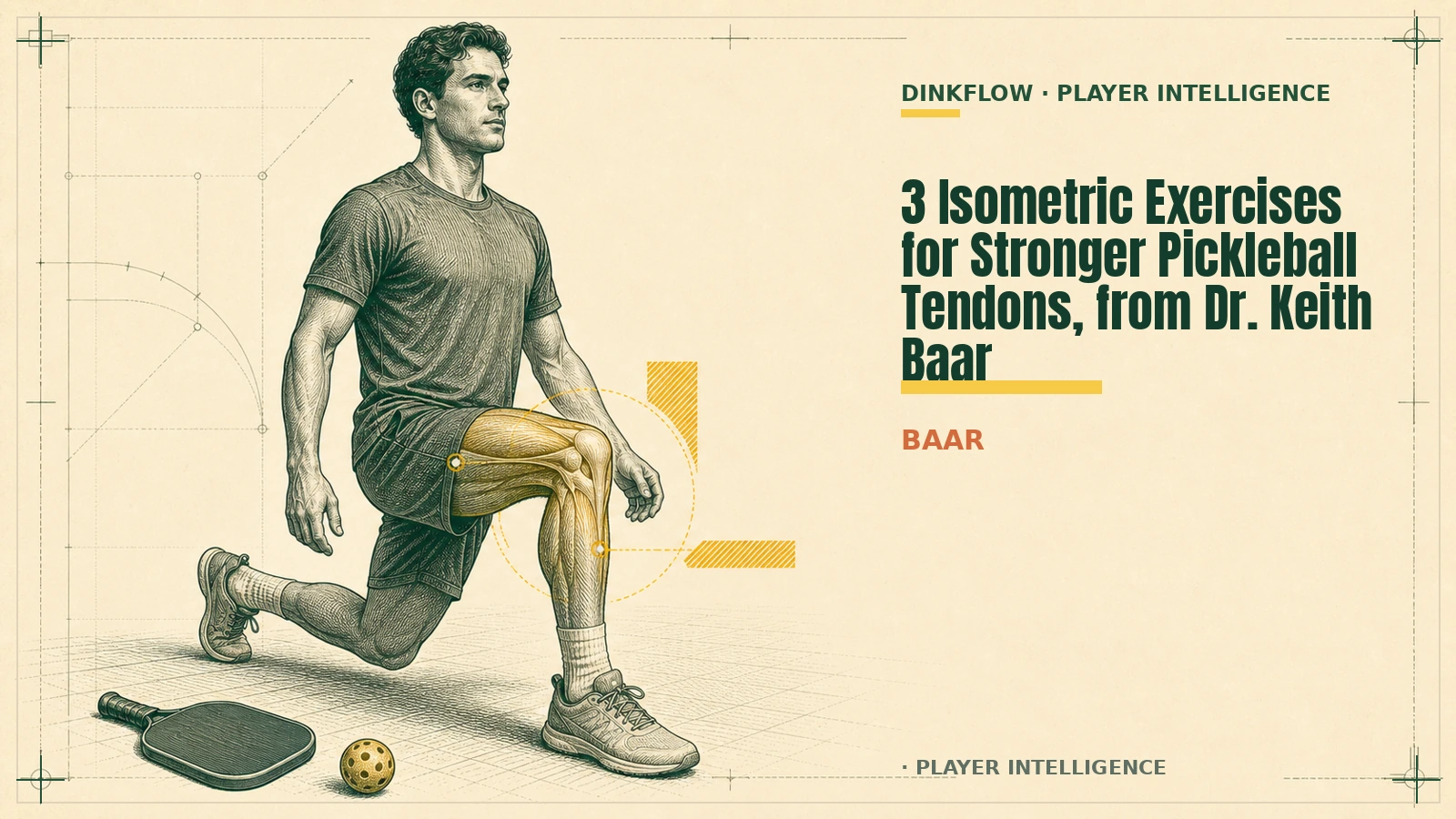
Tendon scientist Dr. Keith Baar demonstrates three body-weight isometric holds for stronger tendons and ligaments. Here is what each one loads and how to point it at the pickleball movements that break down: the split-step, the lunge, and the serve.
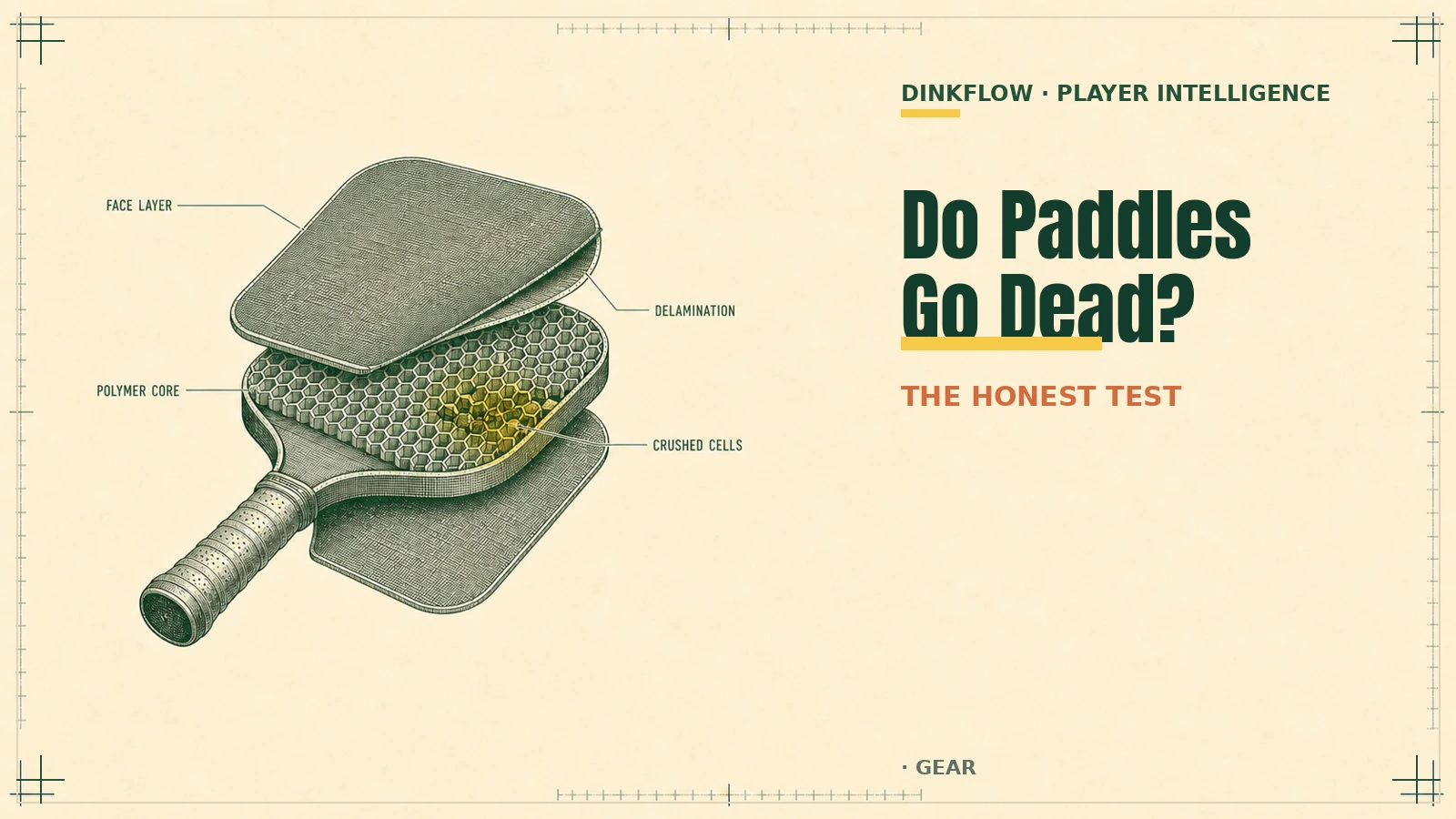
Yes, pickleball paddles go dead: cores soften, faces delaminate, grit wears smooth. A five-minute side-by-side test tells you if yours died or you did.
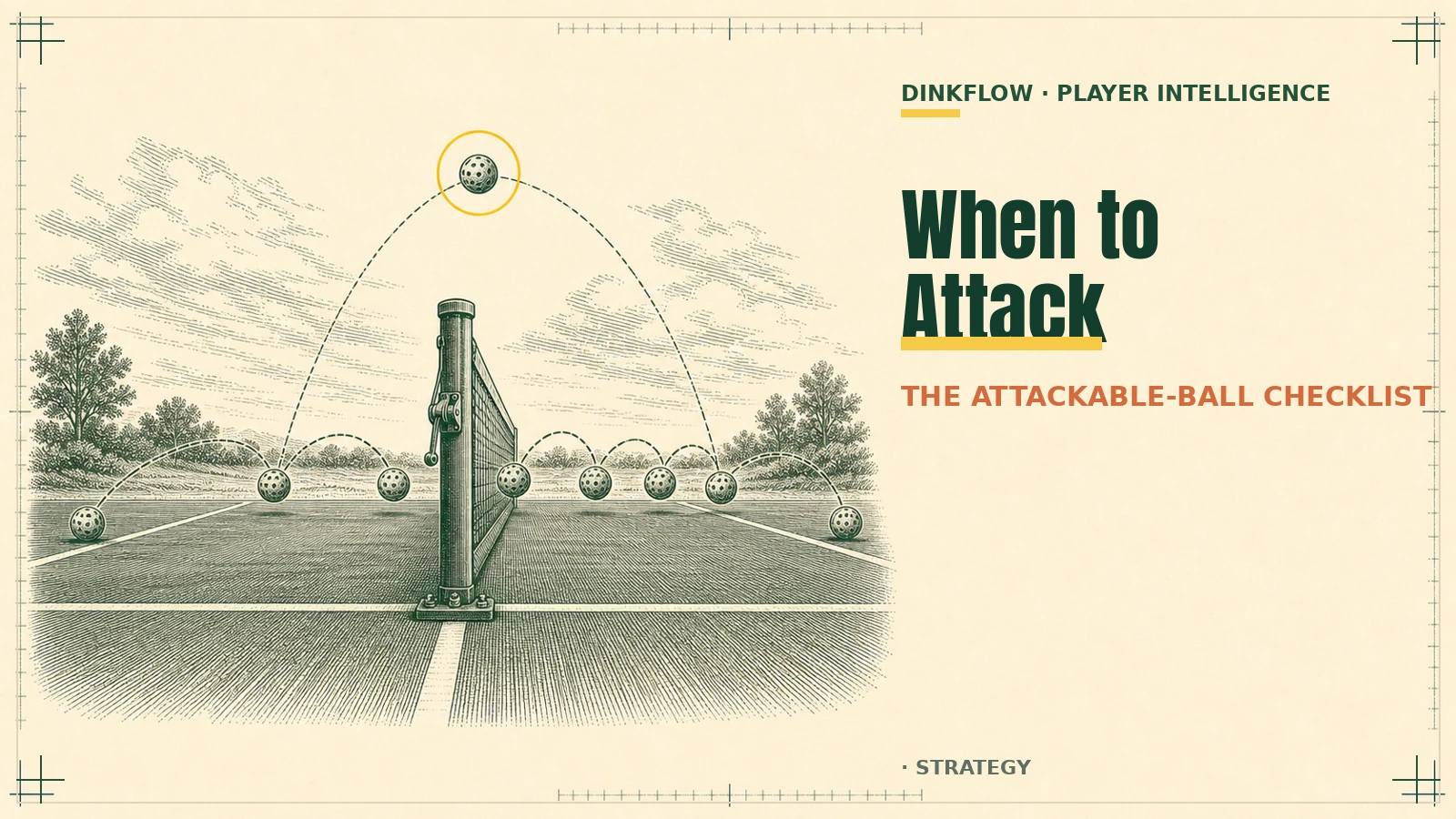
When to attack in a pickleball dink rally: the 4-check attackable-ball checklist — height, feet, their paddle, target — plus a drill to test your reads.
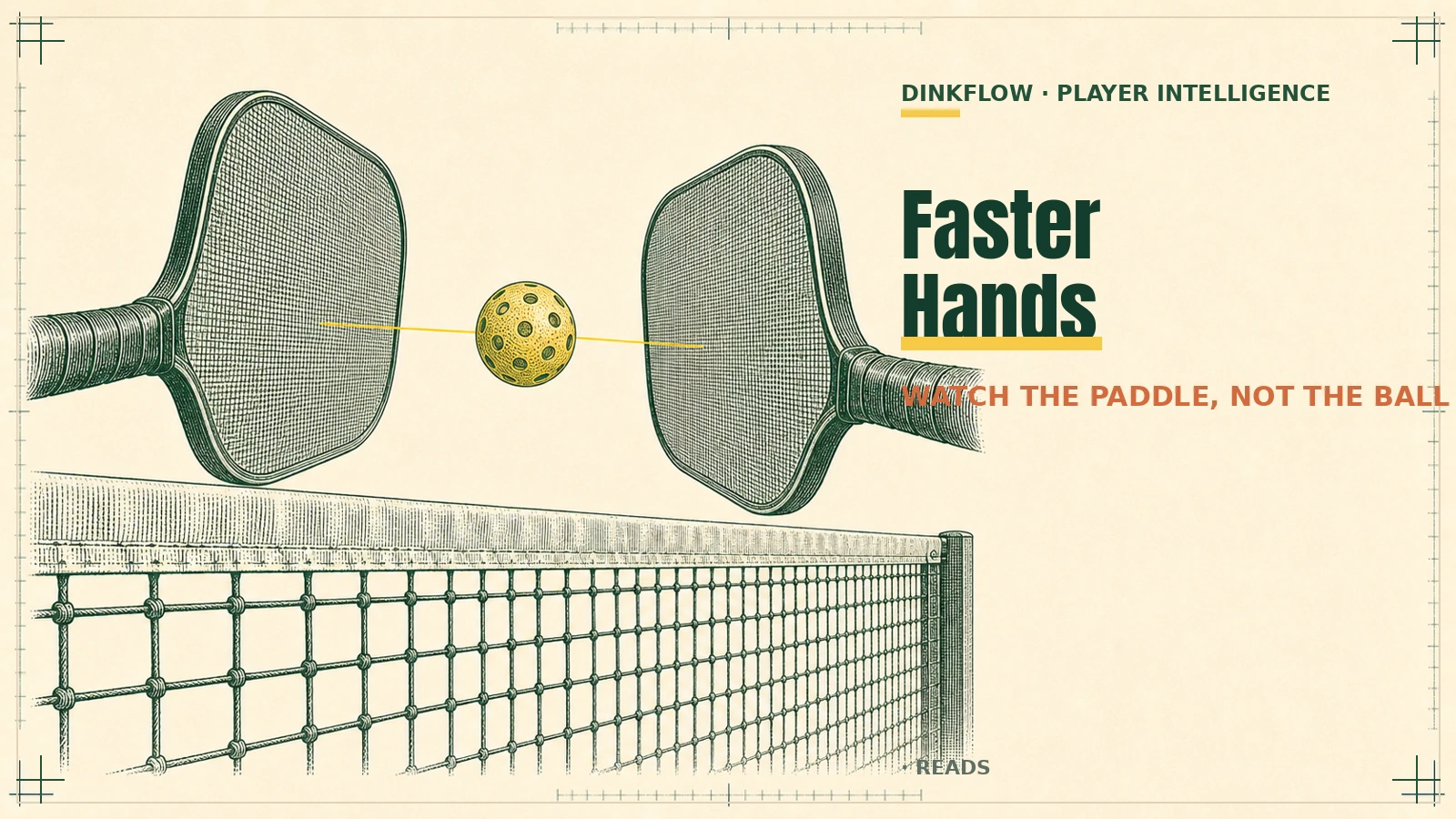
How to get faster hands in pickleball: watch the paddle, not the ball. Learn the pre-contact cues, ready position, and one drill that trains earlier eyes.
Why your DUPR feels wrong: it is a lagging average of your decisions, not a grade on your skill. What the number actually measures, and how to move it.